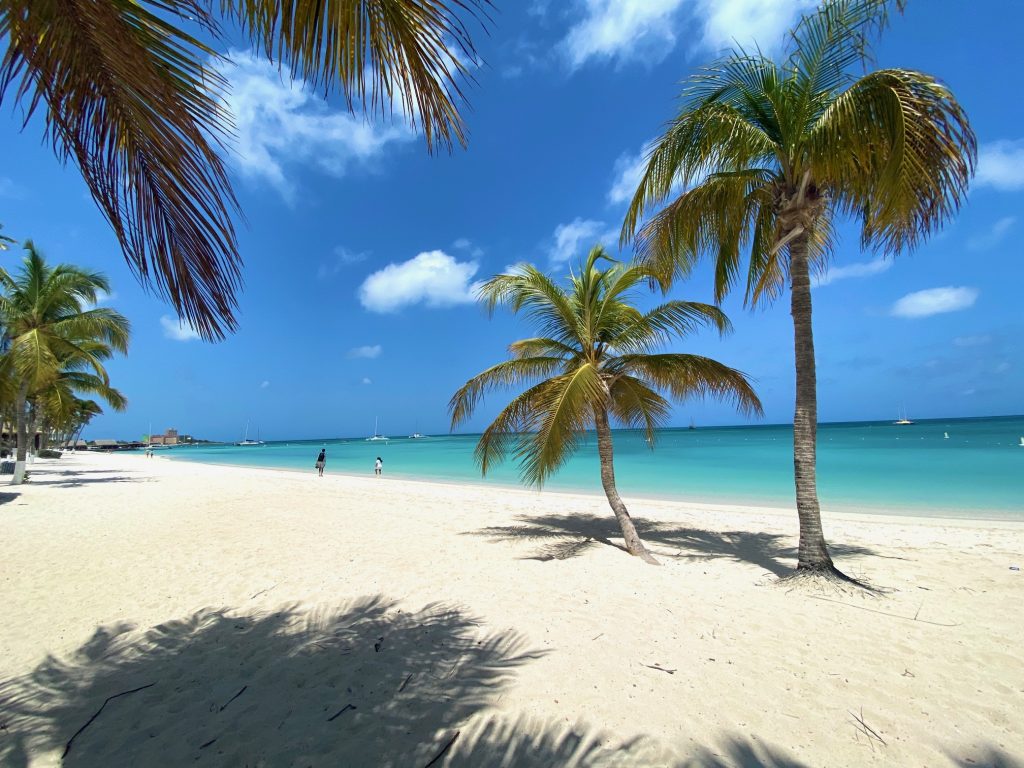


Planning a trip to One Happy Island? If you are the designated travel planner for your family, a solo adventurer, or organizing a girls’ getaway, you know that logistics matter.
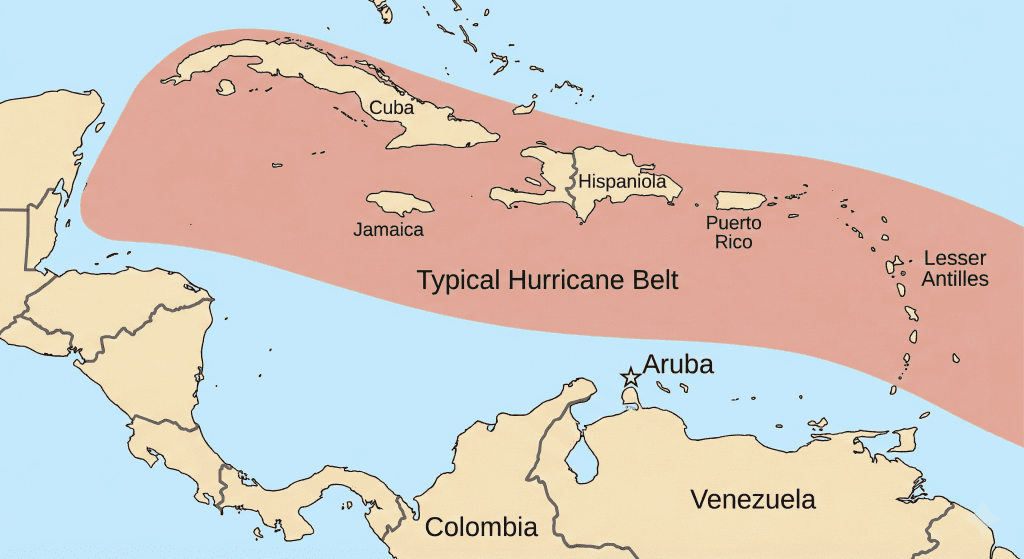
Understanding the unique climate of Aruba is the first step toward a perfect itinerary. Unlike many other Caribbean destinations, Aruba sits outside the hurricane belt and boasts consistent sunshine. But there is one major factor that sets the island’s weather apart: the famous trade winds.
If you’ve been researching, you’ve likely seen the forums buzzing about the wind. Is it too much? Will it ruin a beach day? (Spoiler: It won’t, but you need to pack for it).
Here is your essential guide to the best time to visit, breaking down the “weather and wind” factors so you can book with confidence.
Understanding Aruba’s Famous Trade Winds
Why is it so windy in Aruba?
If you have researched Aruba, you have likely seen mentions of the wind. These are the Trade Winds, a constant, cooling breeze that blows from the east-northeast. While “wind” might sound like a nuisance on paper, in Aruba, it is actually a blessing.
Why the Wind Matters
Think of the trade winds as Nature’s Air Conditioning. Without them, the tropical heat would be intense.
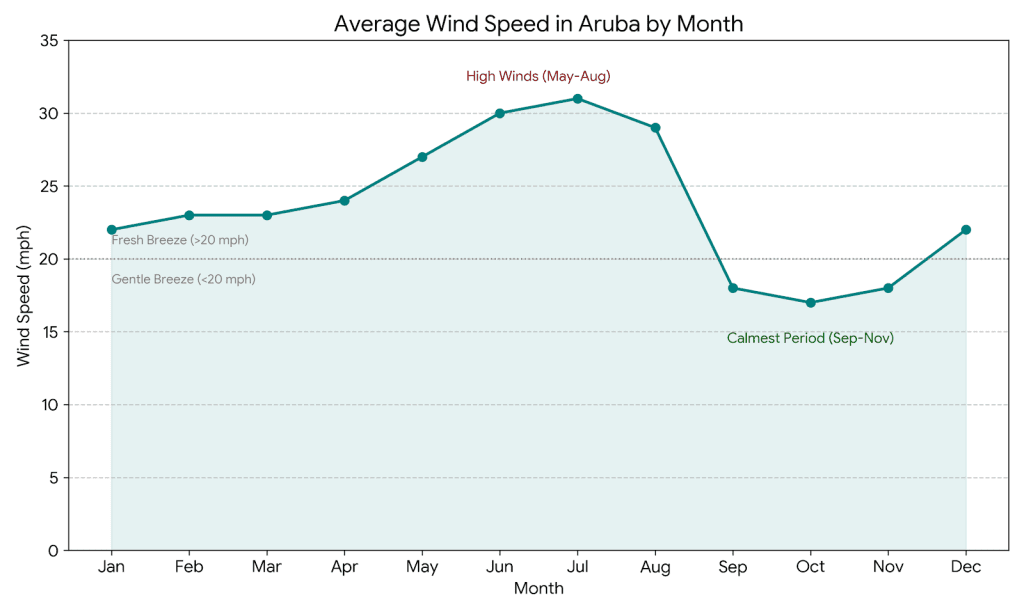
- The “Cooling” Effect: During the high-wind months (May–August), gusts can average 25–32 mph. This keeps you comfortable even when temps hit 90°F. Activities like exploring the rugged north coast in a 4×4 from a reputable car rental are much more enjoyable thanks to this constant breeze.
- The “Feel” Factor: Because the wind evaporates perspiration quickly, you feel fresh. Warning: This can trick you. You may not realize how strong the sun is because you don’t feel “hot.” Always apply high-SPF sunscreen, even if you feel cool.
- Active Travel: These winds make Aruba a world-class destination for windsurfing and kitesurfing, especially in June and July.

Pro-Tip for the Ladies: The wind is constant. Pack confident hairstyles! Bring hat clips (essential so you don’t lose your sunhat), plenty of hair ties, and perhaps leave the flowy, short skirts at home in favor of maxi dresses or chic linen shorts.
Year-Round Sunshine: What to Expect
Aruba has one of the most consistent climates in the Caribbean. If you are worried about your vacation being rained out, you can breathe a sigh of relief.
Temperature
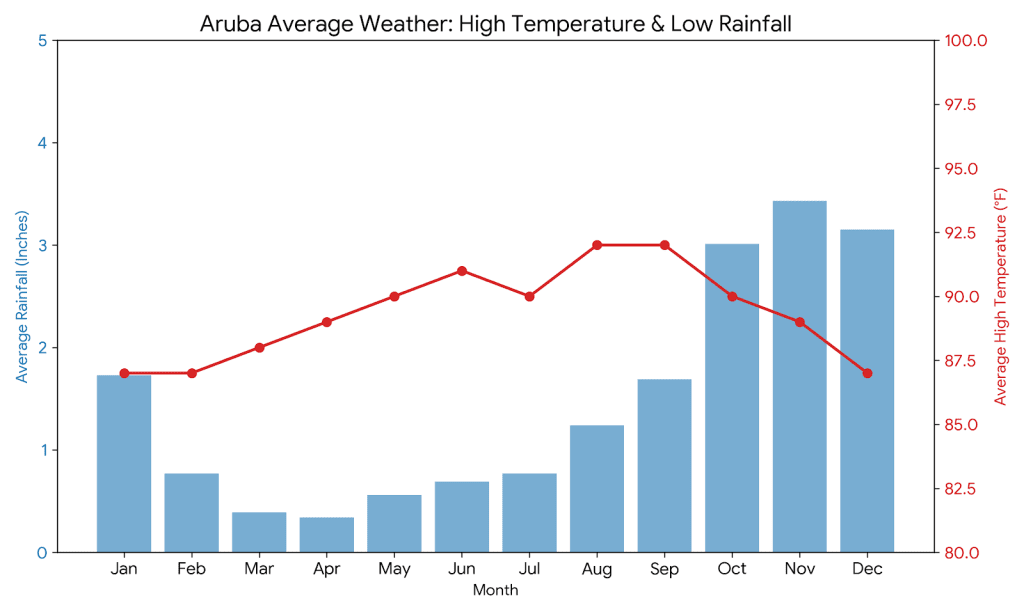
Expect average daytime highs around 84°F to 89°F (29°C to 32°C) year-round. It rarely gets “cold” at night, though a light wrap is nice for breezy seaside dinners.
Rainfall & Hurricane Safety
- Rainfall: Rain showers tend to be brief and passing. The “wettest” months generally fall between October and January, but even then, “rainy” days often consist of short 10-minute bursts followed by immediate sunshine.
- Hurricane Safety: A major anxiety for Caribbean travelers is the hurricane season (June–November). Aruba is located south of the hurricane belt. While the island isn’t immune to tropical weather, direct hits are statistically very rare compared to northern islands, making it a safe bet for summer and autumn travel.
So, When is the Best Time to Visit Aruba?
The “best” time depends entirely on what you value most: impeccable weather, sporty adventures, or relaxation.
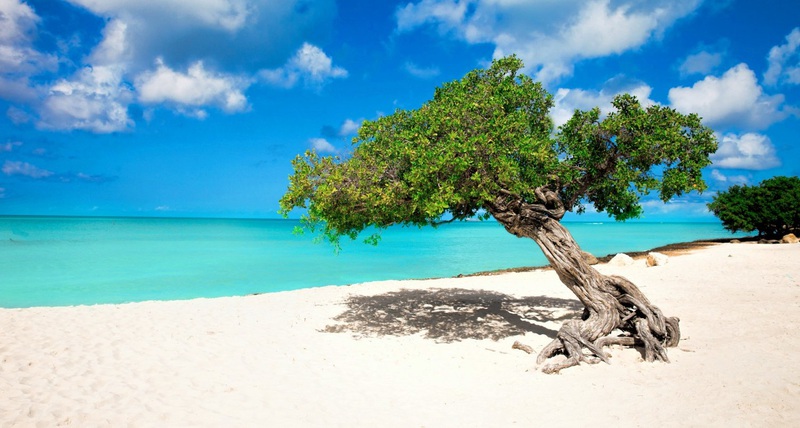
☀️ For the Best Weather (Mid-January – April)
This period offers the classic Aruba experience: steady trade winds (20-25 mph) and dry skies.
- Why go now: If you are escaping a northern winter, this is paradise. You are almost guaranteed zero rain and perfect beach days.
- Where to Stay: Resorts like Bucuti & Tara Beach Resort (adults-only) or Renaissance Wind Creek Aruba Resort with it’s own private island, the Hilton Aruba Caribbean Resort & Casino, as well as many other popular accommodations are in high demand, so book early.
💨 The Breezy “Sporty” Summer (May – August)

Often overlooked by couples but beloved by families and windsurfers. These are the windiest months of the year, with speeds often reaching 25–32 mph.
- Why go now: The strong wind is a vital cooling agent, making the summer heat bearable for children. It’s also “Family Season,” so resorts like Holiday Inn Resort Aruba will be lively.
😌 For Calmer Winds & Relaxation (September – November)

If you dislike strong wind, this is your window. Wind speeds drop to their lowest of the year (averaging 15–20 mph).
- Why go now: The ocean is calmer, making it perfect for snorkeling or floating. You might also find better deals on accommodation during these off-peak months.
- The Trade-off: Because the wind dies down, it can feel significantly hotter and more humid.
Summary: Is There a Bad Time to Go?
Whether you are looking for a digital nomad haven or planning a short getaway, understanding the trade winds is key to packing. With consistent warmth, a cooling breeze, and a location safely outside the storm paths, there is rarely a bad time to visit Aruba.
Ready to book your island escape?
Find the perfect hotel, boutique resort or private home escape for your stay.